
Post-Implementation CRM Strategy: What to Do After Go-Live


Brittany Ivey
Senior Consultant
Summary: This article covers what nonprofit advancement teams should focus on after a CRM implementation. It addresses two priorities: building a data strategy that governs how the CRM is used and developing a technology roadmap that connects the system to broader organizational goals. Topics include data governance frameworks, data security, technology ecosystem planning, and how to prioritize initiatives.
You’ve mapped the data, you’ve learned new functionality, and you’ve trained the staff. Now that you’re live on your new CRM, you can sit back and relax, right? Don’t start sipping your umbrella-donned drink quite yet. What often gets less attention is everything that comes after go-live.
A CRM is not a finished product the day it goes live; it’s a foundation. A solid post-implementation CRM strategy is what determines whether that foundation holds, and whether the investment pays off.
There are two ways to continue to evolve and set your organization up for success: confirm your organization’s data strategy and develop a technology roadmap for the future.
Data Strategy: Building Data You Can Rely On
Implementing a new CRM is a significant investment and go-live is a major milestone. What many organizational leaders don’t realize is that the new CRM is the foundation of the ongoing data strategy, not a catch-all solution. Every organization needs a clear, intentional strategy for how the data within the CRM will be governed, used, and sustained. A data strategy will bridge the gap between the technology and the organization’s work.
If your organization does not already have a data governance framework , now is the time to implement one. Formalizing data governance isn’t about adding bureaucracy. It’s about putting structure in place that will enhance the trust in the organization’s data and its outputs. (These data governance templates can help you establish a single source of truth and build a more reliable data environment.)
Part of data governance includes data security. Data management and security standards are becoming increasingly complex as data constantly moves between multiple devices and systems. Clarifying the accountability for data accuracy and quality at your organization will protect your system from risks and liabilities associated with cybersecurity, data privacy, ethical best practices, and government regulations.
Technology Roadmap: Connecting Your CRM to Your Broader Strategy
A post-implementation CRM strategy doesn’t stop at the system itself. Your CRM is the strategic hub of your overall data ecosystem. The next critical step after going live is defining how it fits into your broader, long-term technology strategy that supports your mission, operations, and growth. Read next: How to Assess Your CRM’s Impact on Your Data Ecosystem
A technology roadmap provides clarity on where your organization is headed, which tools you will invest in, and how technology will evolve alongside your programs and fundraising strategies.
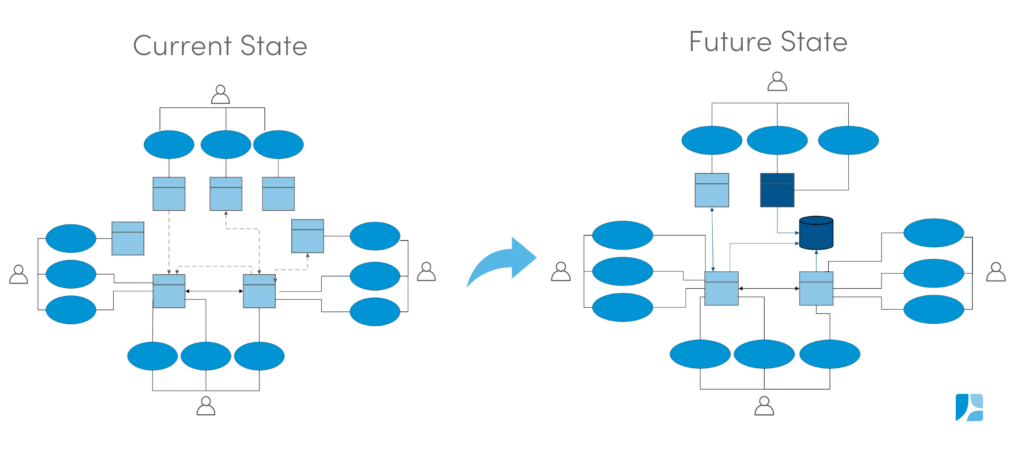
Step 1: Understand where you are today
Start by taking stock of where your organization stands today. Ask yourself:
- What has changed with the adoption of your new CRM?
- What gaps still exist?
- Are your systems integrated, or do you need to enter data in two places?
Step 2: Define where you want to go
Once you have a clear picture of the current state of your data ecosystem, develop an organization-wide vision for where you want your ecosystem to go. Involving staff in this process builds buy-in and yields better results.
One example of staff involvement is hosting a goal-setting meeting, where the purpose is to set overarching goals and KPIs to help staff remember why their efforts are important.
Step 3: Prioritize what to tackle first
To achieve your organization’s data ecosystem vision, you will next need to do a bit of planning to decide what to accomplish first. Before adding anything to your roadmap, measure the potential impact of each change by asking the following questions:
- Impact on External Stakeholders – will it improve the experience for your constituents?
- Increased Revenue – will it bring in more revenue?
- Operational Efficiency – will it make your staff more efficient?
- New Functionality – does it add new critical functionality to help you compete?
- Risk Management – will it mitigate an existing risk?
- Strategic Alignment – does it align with your overall strategy?
To assess each question above, make the case for its prioritization by measuring the impact and urgency. The Prioritization Matrix below may be helpful; for example, something noted as high urgency and high impact may be noted as the highest tier of priority.

Once the priorities are set, use them to develop the roadmap to your future technological state. The roadmap should include all projects and initiatives that will improve your data, operations, and technology; this may include selecting and implementing new technology to complement the CRM, hiring additional staff, or launching a data governance working group.
Plan for Three Years, Review Every One
At JCA, we recommend aiming for a 3-year plan. It gives your organization enough runway to plan strategically while staying realistic about what can get done. Use the roadmap to support your internal planning and budgeting processes and revisit it annually. As part of the annual check-up, you can look at what your organization has achieved, what you learned, and what you plan to work on next.
Post-Implementation Support: What Comes Next
If your organization is past go-live and figuring out what comes next, we can help. Whether you need support building a data governance framework, developing a technology roadmap, or thinking through your next steps, let’s start the conversation.
Contact Us